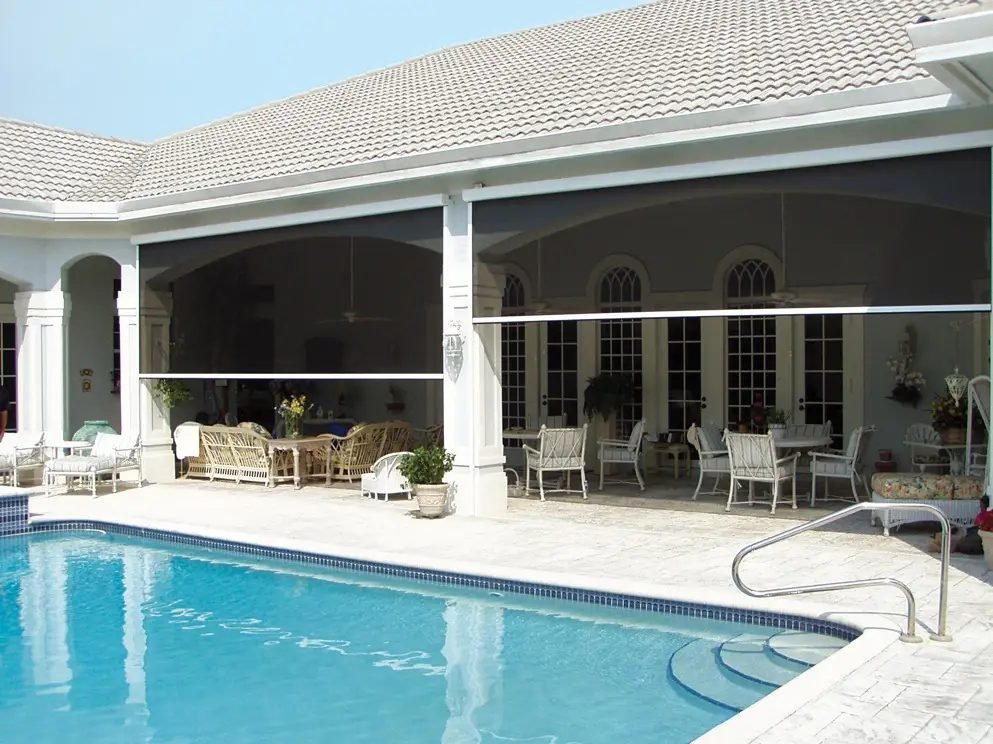
Lower panels and the door
Pet screen if a dog lives here, standard if not. Below a mid rail, the heavier mesh barely affects the view from a chair.

The right screen depends on what is trying to get through it. Putting no-see-um screen on a porch in Charlotte means a tighter 20 x 20 weave that stops the tiny biting midges standard mesh can let in. Pet screen takes claws and paws, and solar screen tames a hot wall. Express Sunrooms of the Carolinas has screened Charlotte porches since 1995, and we mix grades opening by opening. Below: what each grade does, what it costs you in view and breeze, where each belongs on a porch, and published installed prices.
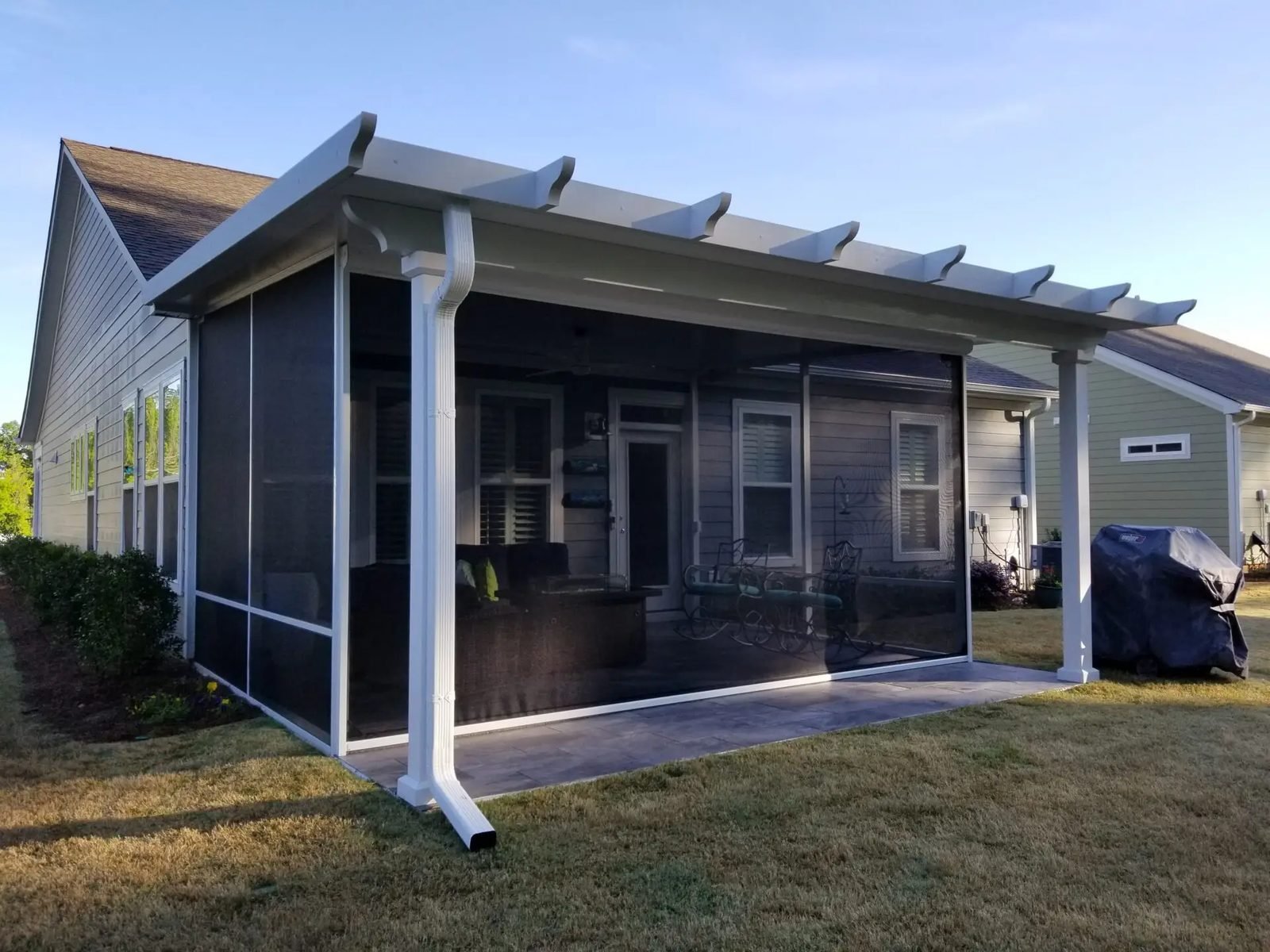
Every grade keeps out mosquitoes. They differ in how small an insect they stop, how tough they are and how much view and air they give up to do it.
| Standard | No-see-um | Pet screen | Solar screen | |
|---|---|---|---|---|
| Build | Fiberglass, 18 x 16 mesh | Fiberglass, tighter 20 x 20 mesh | Vinyl-coated polyester, about seven times the thickness of standard fiberglass | Dense weave made to block sun |
| Made to stop | Mosquitoes, flies, wasps | Also no-see-ums, gnats and sand flies | Insects, plus tears and punctures from dogs and cats | Insects, and cuts as much as 65% of solar heat and glare |
| View out | Clearest | Slightly reduced | Noticeably reduced | Darkest |
| Breeze through | Most | A little less | Less | Less |
| Usual spot | Most walls, the view side | Sides facing woods, creeks or a lake | Lower panels and the door | A west or south wall in full sun |
Specs as published by screen manufacturers in their product information (checked November 2026). View and airflow notes are general comparisons, not lab figures.
Mesh count is the number of strands per inch in each direction. An 18 x 16 screen has 18 strands one way and 16 the other; a 20 x 20 has more of both, so each opening is smaller. Smaller openings stop smaller insects, and they also let a little less air and light through. That trade is the whole decision.
Most Charlotte porches only need standard mesh, because the main pest is the mosquito. According to NC Cooperative Extension, North Carolina's main mosquito problem is the Asian tiger mosquito, a daytime biter, so the porch needs protecting at lunch as well as at dusk. Standard 18 x 16 screen stops it.
Biting midges are a different story. NC State Extension describes biting midges as sometimes only 0.5 mm long, breeding in fresh and salt water habitats, and present through most of the warm season around inland breeding sites. The same publication notes they get in through gaps or tears in screening.

Dogs jump at squirrels, lean on walls and scratch at the door to go out. Cats climb. Standard fiberglass is not built for any of that.
For dogs, pet screen below a mid rail covers the zone they reach, while standard or no-see-um mesh above keeps the view.
Cats go up the wall, not through it. On a cat porch, pet screen is worth running to the top on the walls they favor.
The door takes the most paws. Pet screen on its lower half plus a push bar or grille, and a closer so it is never left open.
Solid aluminum panels along the bottom of each opening take the scratching and the nose prints at floor level.
A pet door can be built into the screen door or a kick panel, so the dog lets itself out to the yard.
Muddy paws are part of the deal. See our screened porch flooring options.
A well-planned pet screen porch lets the dog lie in the breeze with you instead of watching from behind the kitchen door.
Picture the porch wall by wall. Most porches end up with two grades, some with three.

Pet screen if a dog lives here, standard if not. Below a mid rail, the heavier mesh barely affects the view from a chair.
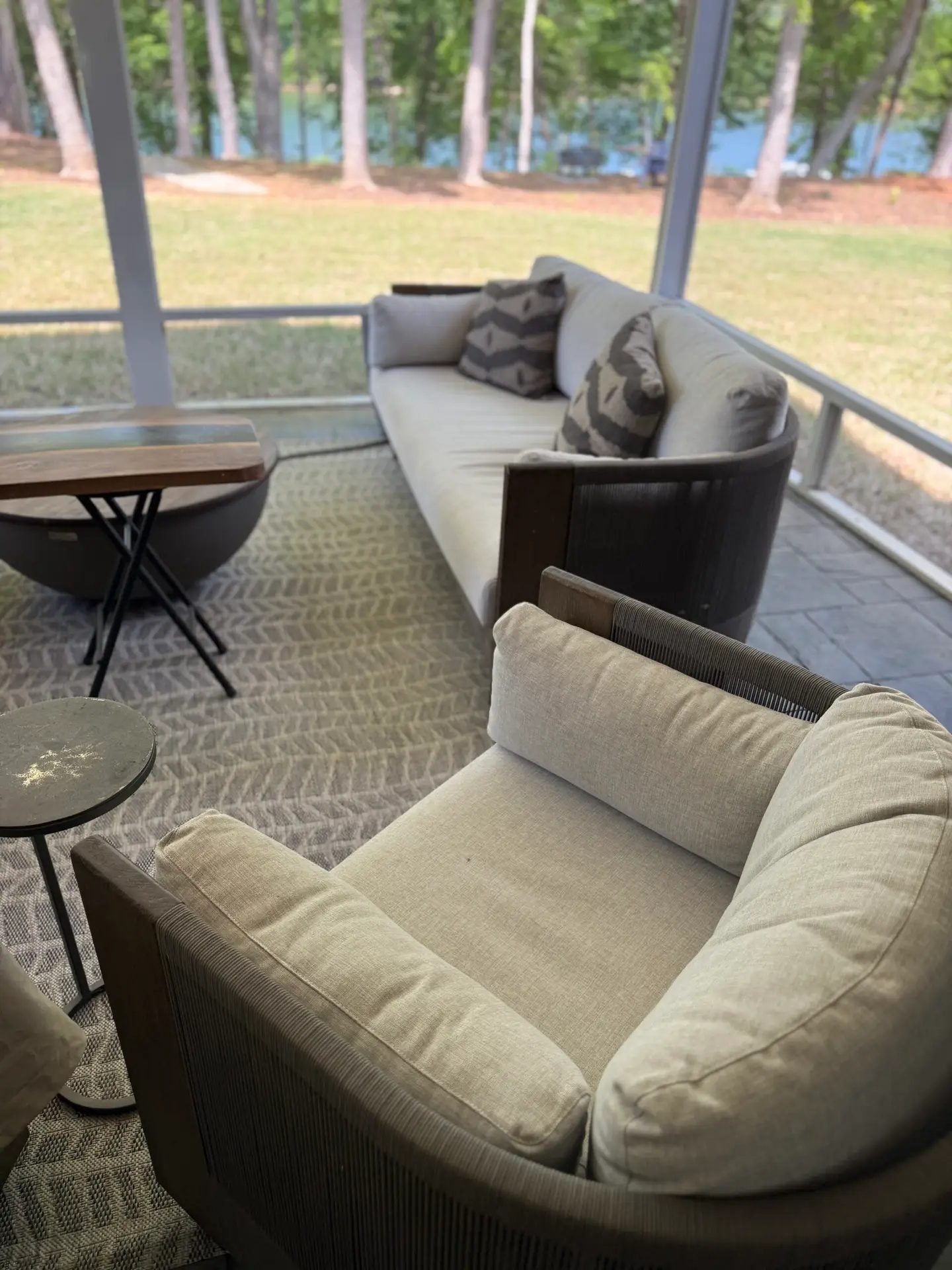
The 20 x 20 weave on that side only. The street or yard side can stay standard for the clearest view.
Solar screen where the late sun hits the table. It darkens the view on that side, so keep it to the wall that needs it.
Standard mesh where you look out most, toward the yard, a garden or the kids' play set.
Every upgrade costs something in view or breeze. Here is how to keep that cost small.
Which walls get the bites, which panels get torn, which side gets the late sun.
Match a grade to each problem and leave the rest standard, so the porch keeps its breeze.
The frames stay; only the mesh and spline change. The walls you leave alone are not touched.
While we are there, we check the floor, ceiling line and door for gaps that would undo the upgrade.
Fixr publishes installed prices per square foot for common screen materials. Checked November 2026; a planning range, not our pricing.
| Screen material | Installed, per sq ft |
|---|---|
| Aluminum | $2.50 to $4 |
| Fiberglass | $4 to $5 |
| Sun-blocking | $4 to $5 |
| Premium metals | $3 to $6 |
| Retractable | $20 to $30 |
Source: Fixr porch addition cost guide. Fixr does not list midge-grade or pet screen as separate lines, so we price those per opening at the estimate.
Because each opening on a Sunspace porch system is its own frame, mesh can be changed later at any rescreening. You are not locked in. Whole-project figures are on screened porch cost in Charlotte, and for more on the main site, the Express Sunrooms screen porch page.
If biting gnats or a determined dog are the problem, no-see-um screen and pet screen on a Charlotte porch fix it wall by wall. Call (704) 713-7151 or send the form and we will map your porch with you.
Screen grade changes the price per square foot, but the bigger number is still whether the porch needs a roof and floor.
Screen walls under a roof and on a floor you already have.
Sources: This Old House (Angi data), Inch CalculatorFootings, floor, roof and screen walls built from scratch.
Source: Inch CalculatorA Charlotte-area builder's published range for screened porches.
Source: Green Exterior RemodelingPublished ranges, not Express Sunrooms pricing. We measure your porch and give you a written price for free. See the full Charlotte screened porch cost guide.
Tell us about the space. We come out, measure, show you options and leave a written price. There is no charge and no pressure to sign.
A biting midge, a tiny blood-feeding fly. NC State Extension says some are only 0.5 mm long and that they breed in fresh and salt water habitats. They are small enough to get through gaps or tears that would stop a mosquito.
Yes. Its 20 x 20 weave is tighter than standard 18 x 16 mesh, so it stops everything standard mesh does plus gnats, sand flies and no-see-ums.
Somewhat, because the openings are smaller. Most homeowners use it only on the walls facing woods or water and keep standard mesh elsewhere. A ceiling fan covers the difference on still nights.
Pet screen is a vinyl-coated polyester about seven times the thickness of standard fiberglass, built to stand up to claws and punctures. A large dog at full speed can still push a panel out, so kick panels and a push bar on the door help.
Yes, a little, because the strands are thicker. Used on the lower panels, below eye level when you are seated, the difference is hard to notice.
It cuts as much as 65% of solar heat and glare, which helps on a west or south wall. The trade is a darker view, so it is usually limited to the wall that needs it.
Yes, and most porches should. Each opening has its own frame, so pet screen low, the tighter weave toward the woods and standard on the view side is a common layout.
Call the Charlotte office or send the form. We will measure your space and leave you a written price.